Illustrator Setup Automation
A set of Illustrator scripts written with AI to automate production file setup and routing, reducing a repetitive manual process to a one-click action.
Overview
A set of Illustrator scripts written with AI to automate production file setup and routing. The goal was to take a repetitive manual process and reduce it to a one-click action, while ensuring every file met factory-specific requirements.
What It Does
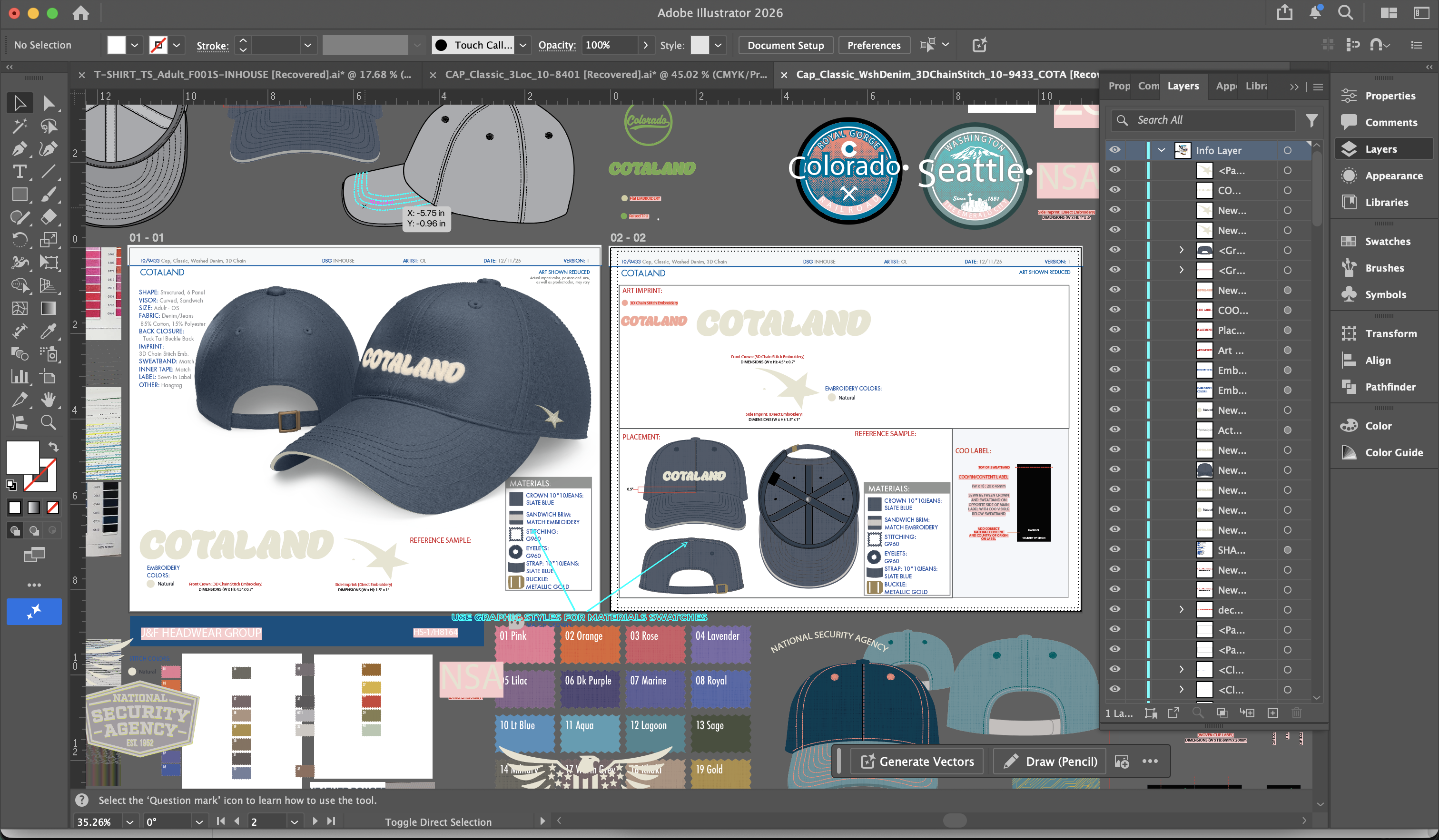
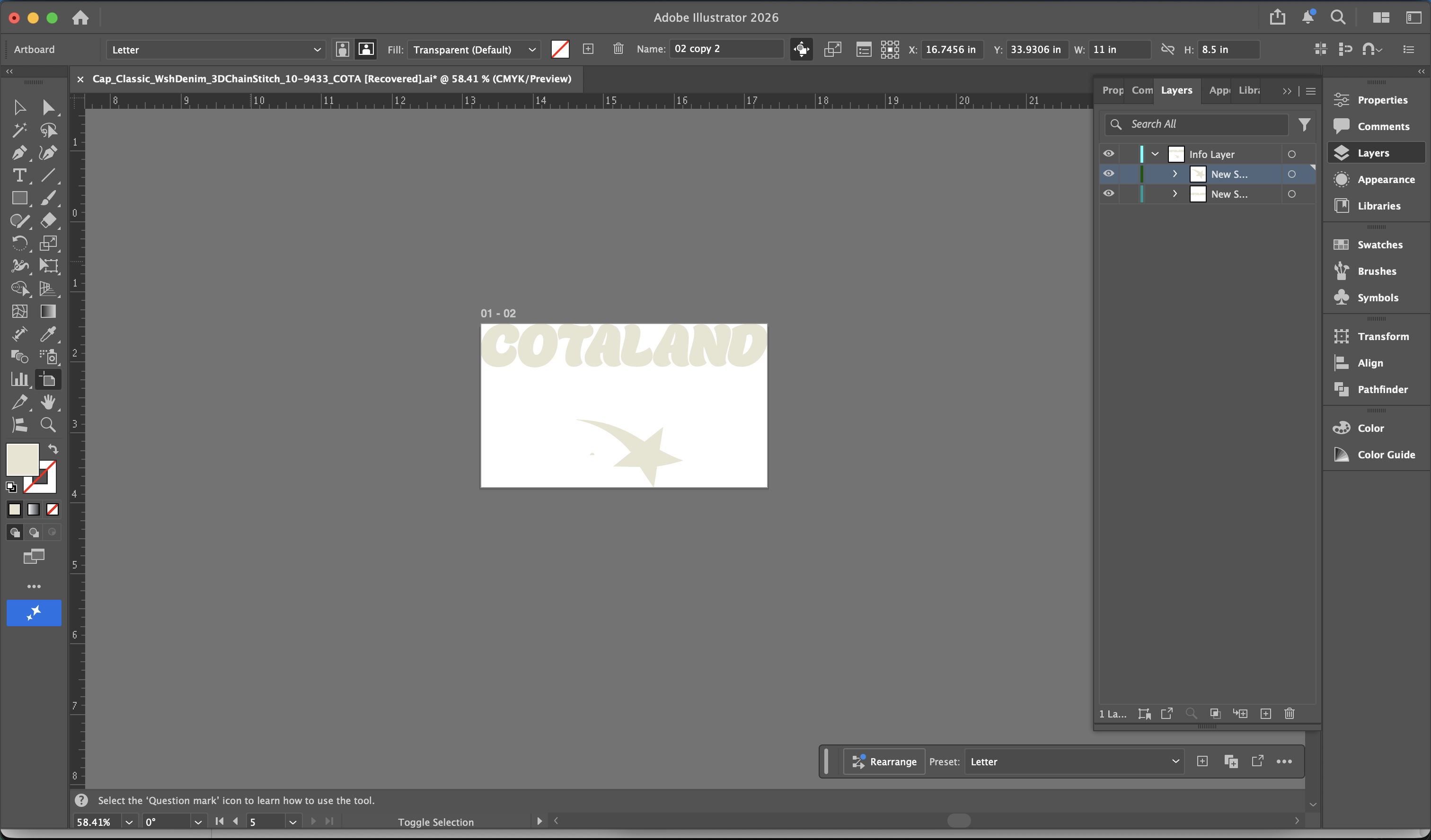
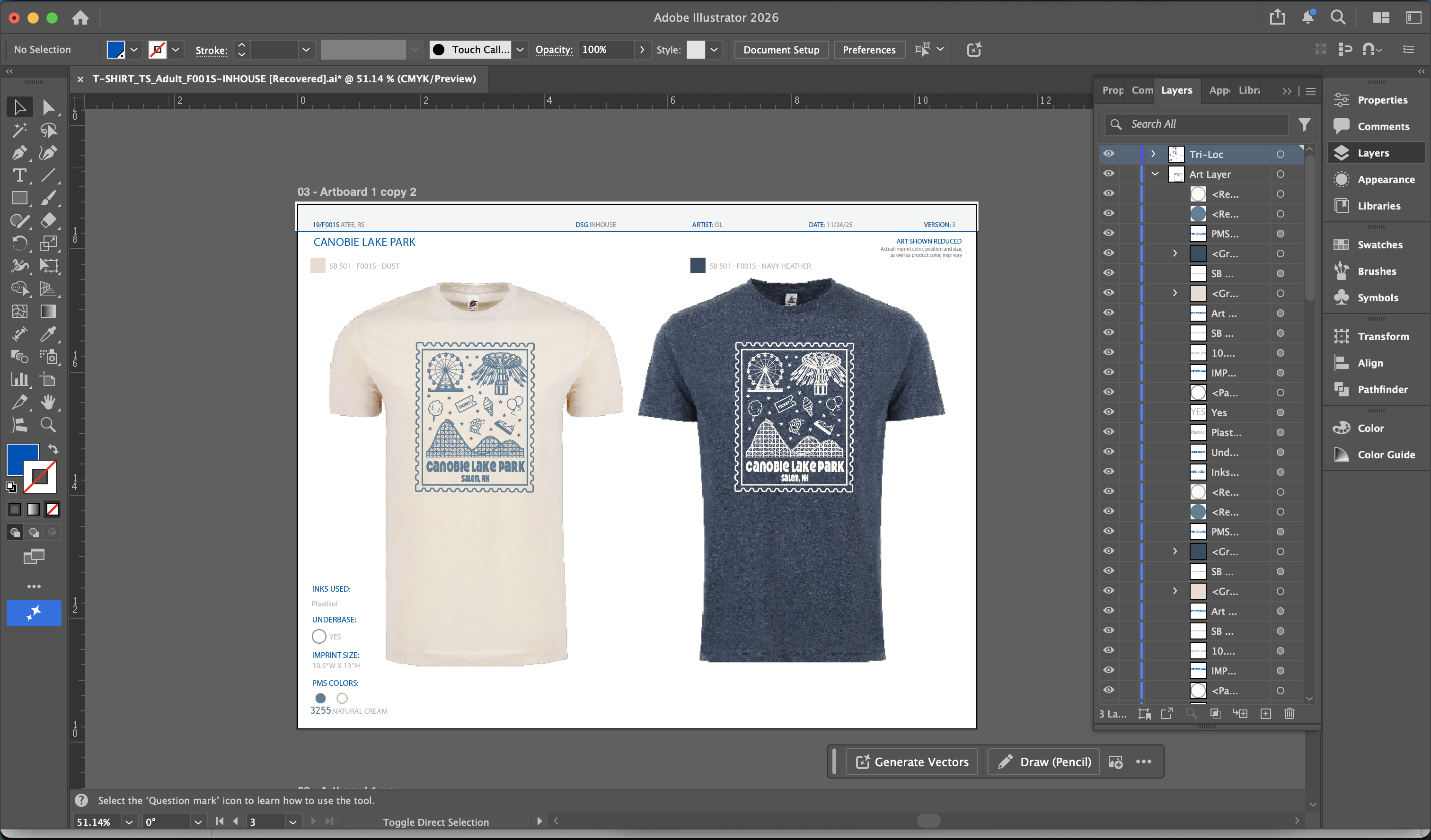
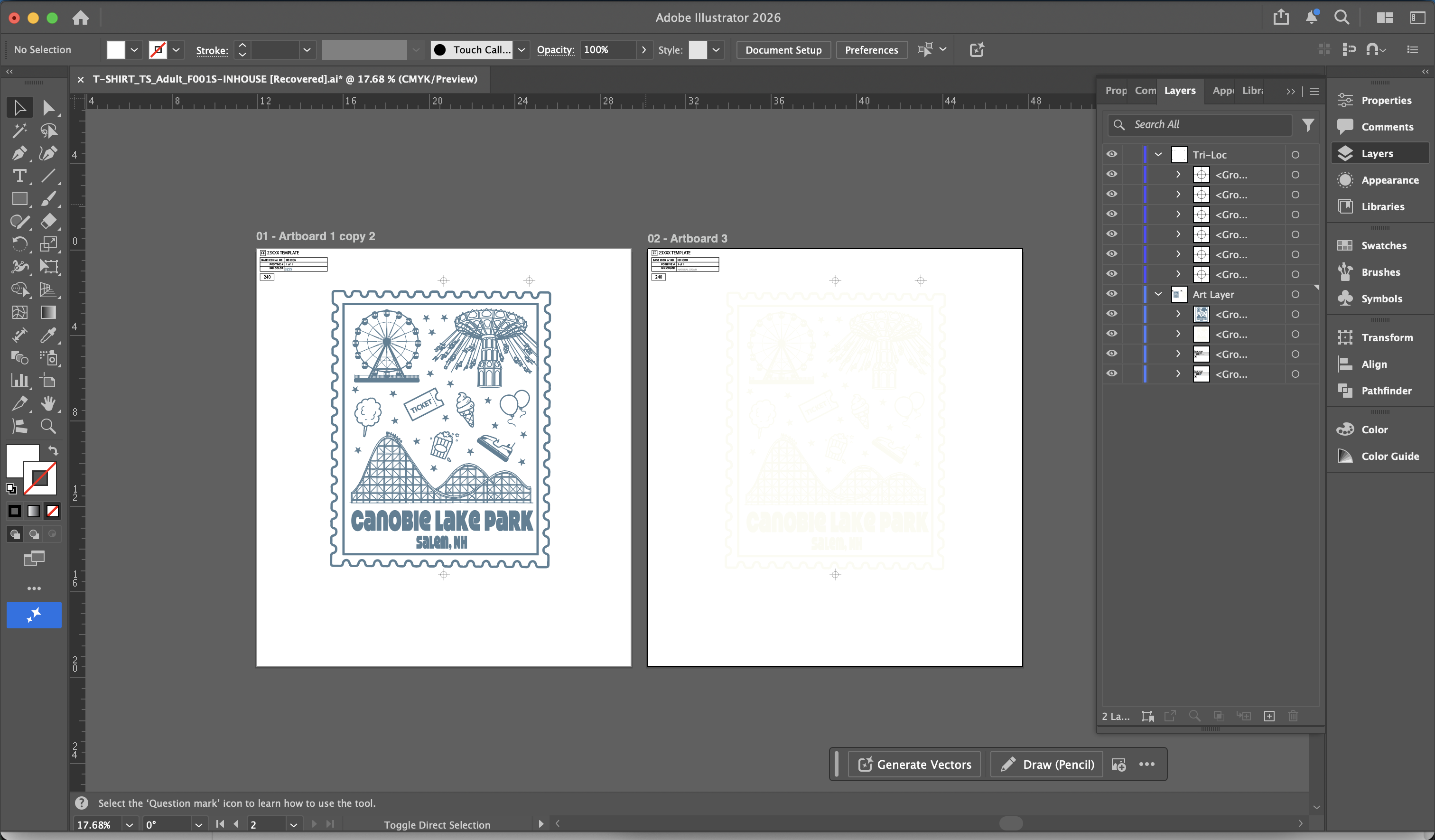
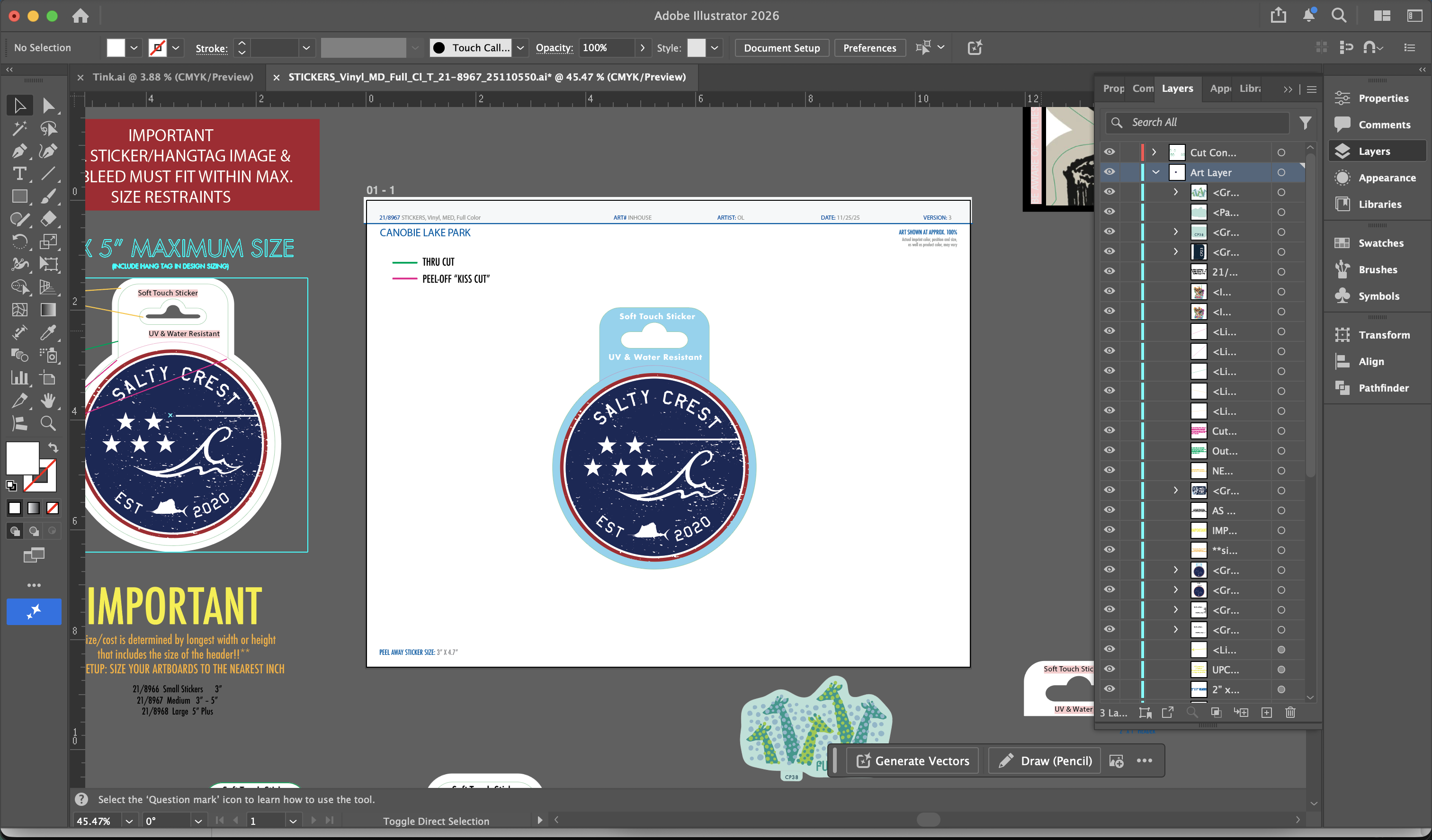
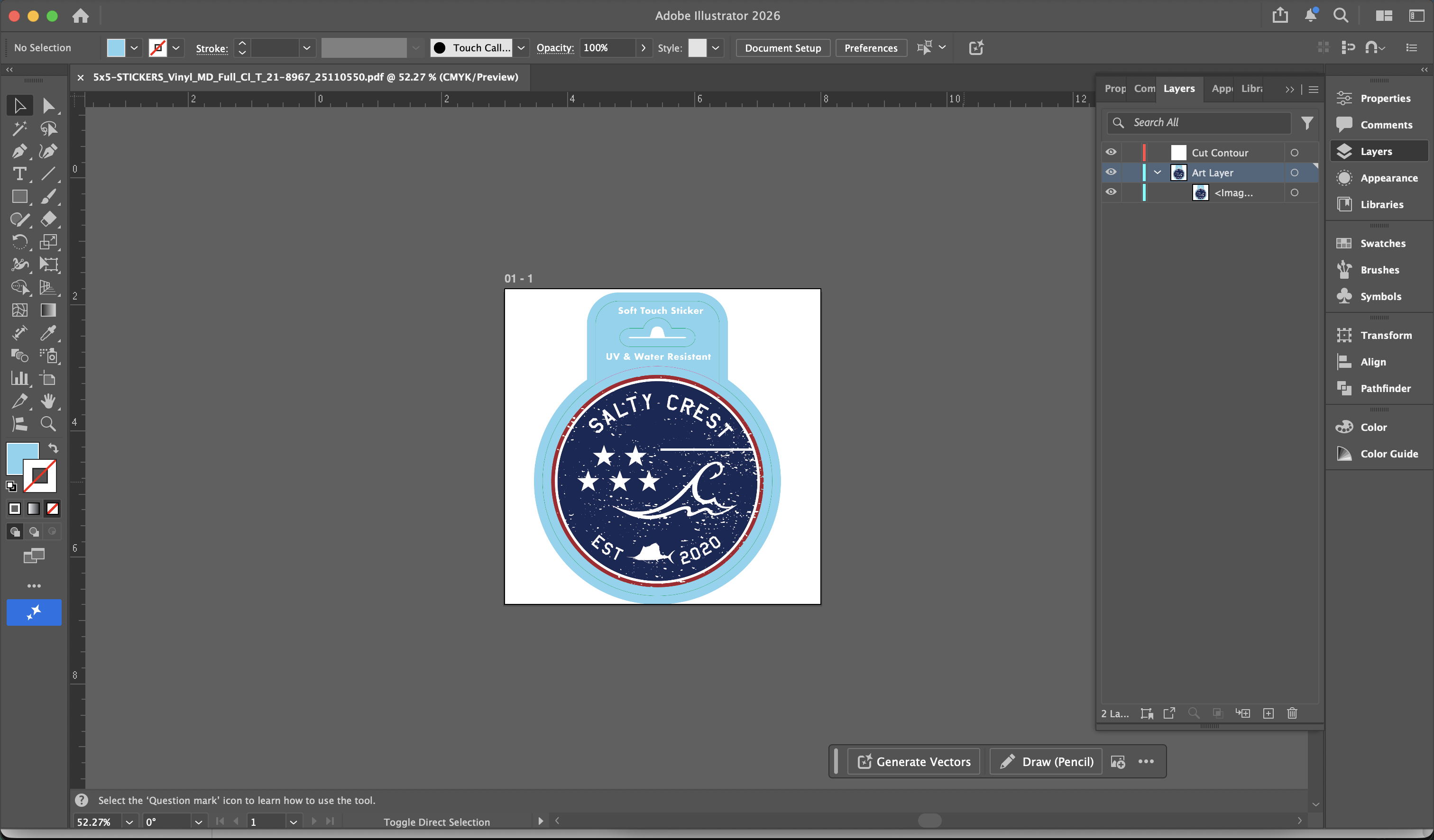
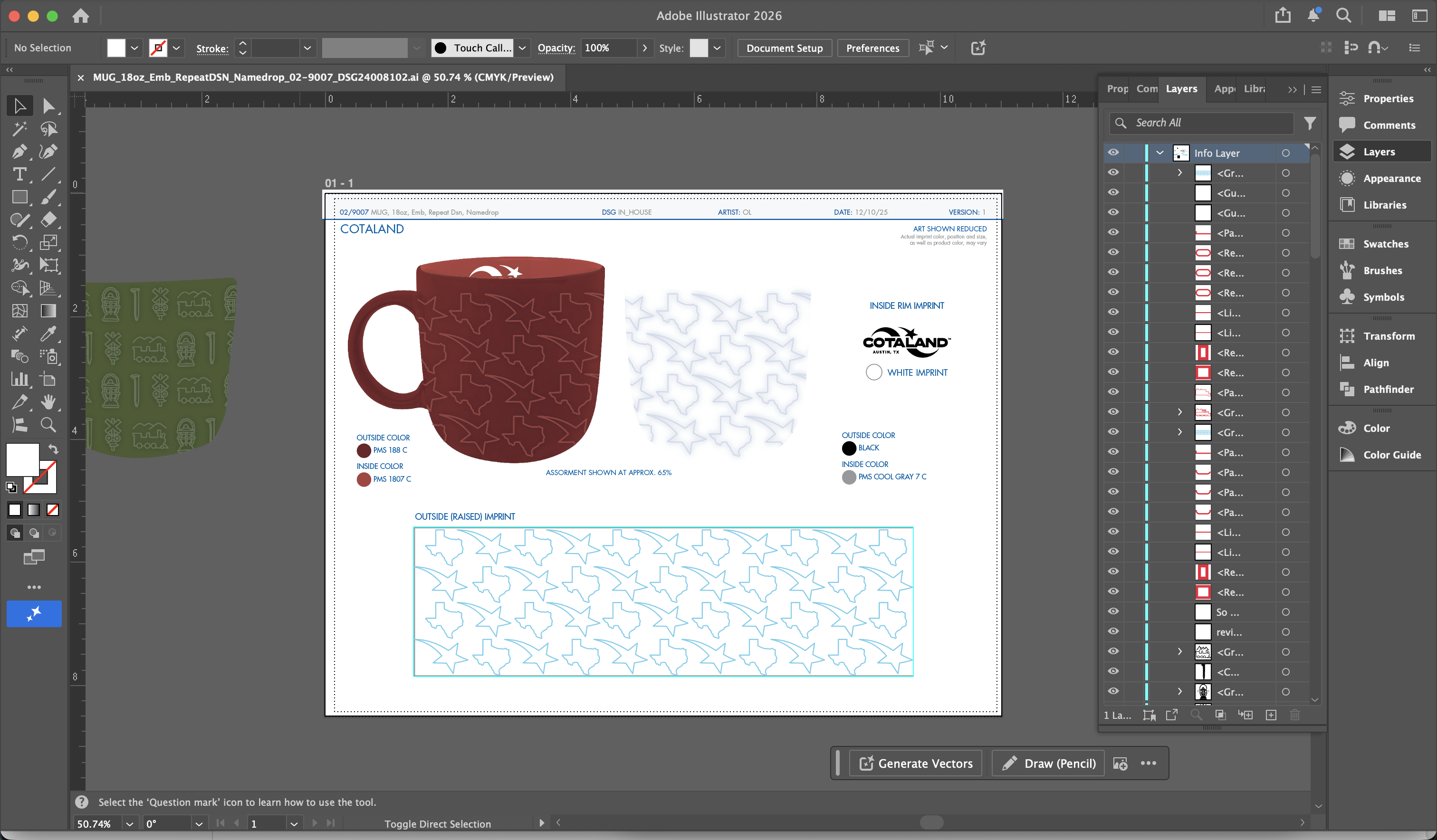
The scripts handle setup and routing across four categories: Apparel — built on required templates with defined color callouts, routed to a specific factory. Stickers — includes die cut / kiss cut setup, rasterized output, routed to a dedicated factory. Hats — supports multiple artwork pieces, isolates them across artboards, routed to its factory. General items — isolates a single piece of artwork (keychains, ornaments, etc.) and routes based on item type. For the first three, the destination is fixed. For general items, the script determines the correct factory and sends files to the appropriate location (SharePoint or SFTP).
System Behavior
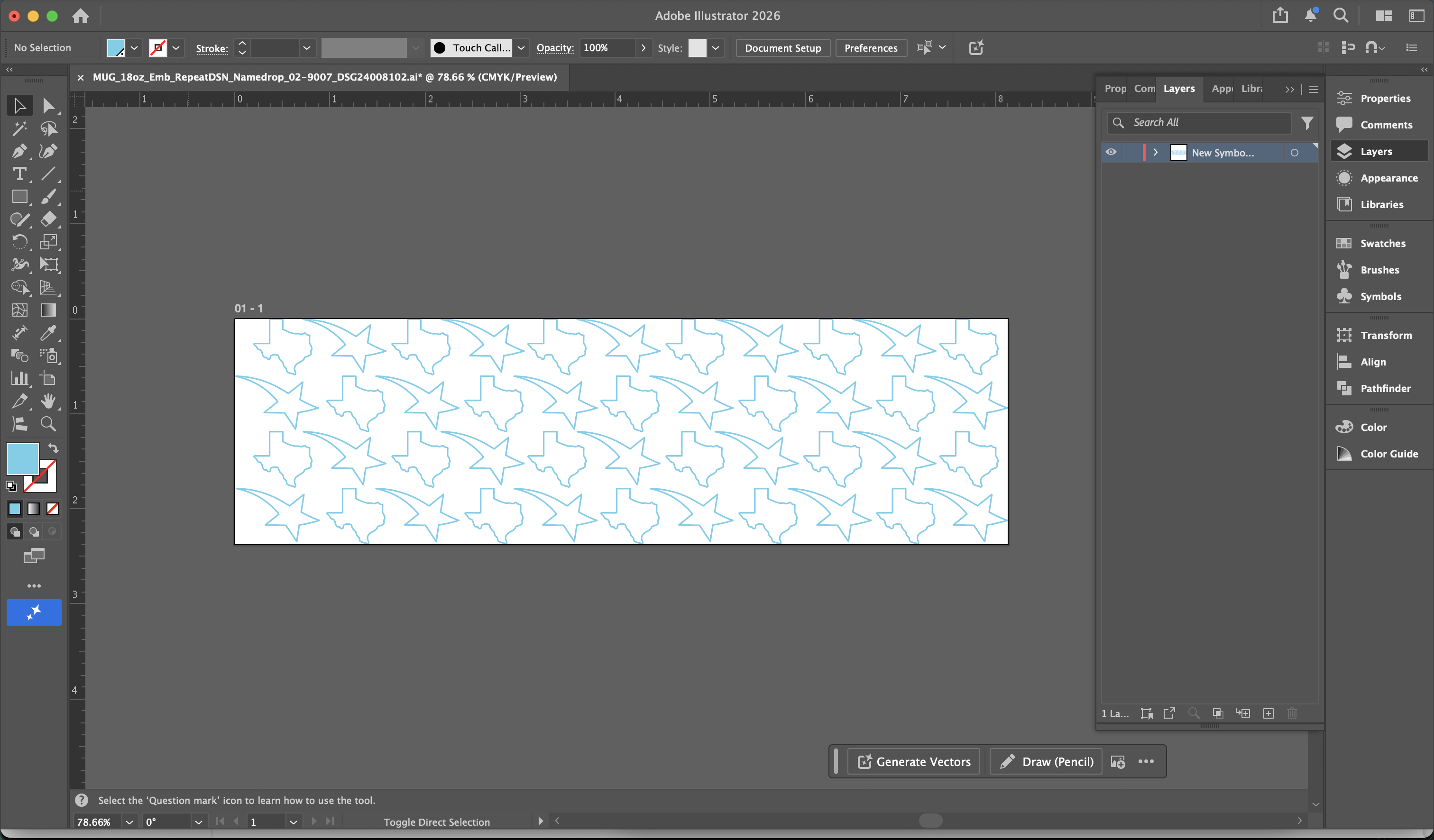
Each script standardizes the file and applies setup requirements such as layer structure, template placement, color callouts, rasterization, die/kiss cut paths, and multi-artboard separation. The output is then placed directly into the correct production pipeline. This removes manual prep, manual routing, and reduces setup errors.
Impact
Time per setup: 3–7 minutes → ~1 click Weekly volume: 10 artists × 15 setups = 150 setups/week Weekly time saved: 7.5–17.5 hours Annual time saved: ~390 to 910 hours Labor savings at $30/hr: ~$11,700 to ~$27,300/year
Extension (Not Implemented)
The scripts handled file prep and delivery, but not downstream system updates. Integration with Business Central would have allowed automatic updates across internal systems, extending the same time savings further.