RapLabelGM
A hip-hop label management simulation app focused on systems design, artist progression, data-heavy UI, game mechanics, and long-term strategic decision-making.
Overview
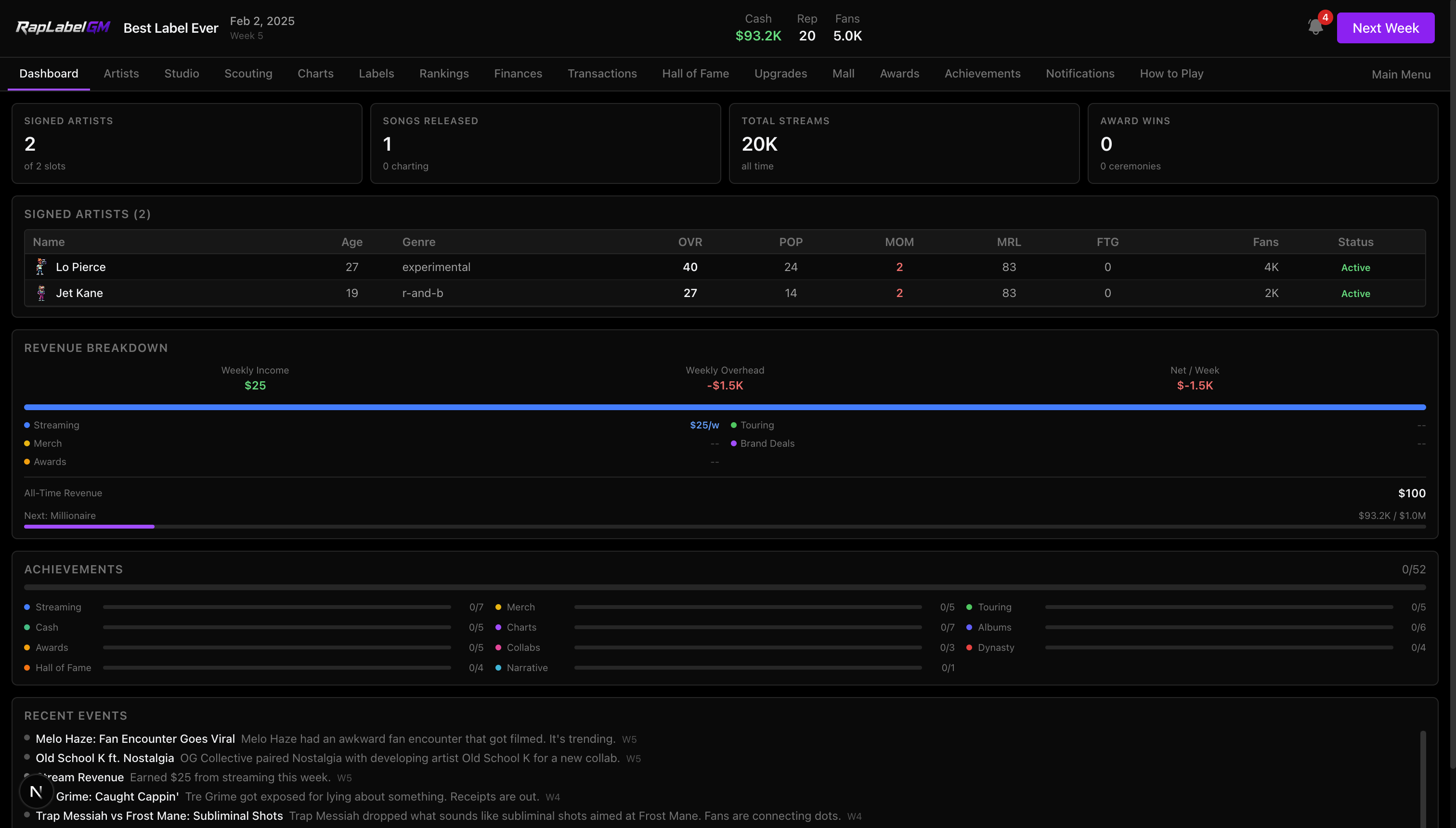
RapLabelGM is a simulation app where users manage a hip-hop label through interconnected systems including artist development, music production, release strategy, and financial management. The project focuses on designing data-heavy systems that feel strategic and grounded in real-world music industry dynamics without requiring expert knowledge.
Design Goal
The goal was to create a music industry simulation that feels as close to real-world label management as possible, while still being accessible to someone who is simply a fan of music. The experience is inspired by sports management games, where users can make high-level strategic decisions — signing talent, developing artists, planning releases, and managing finances — without needing deep industry expertise. The challenge was balancing multiple interconnected systems so that decisions feel meaningful and realistic without becoming overly complex or difficult to understand.
Simulation Systems
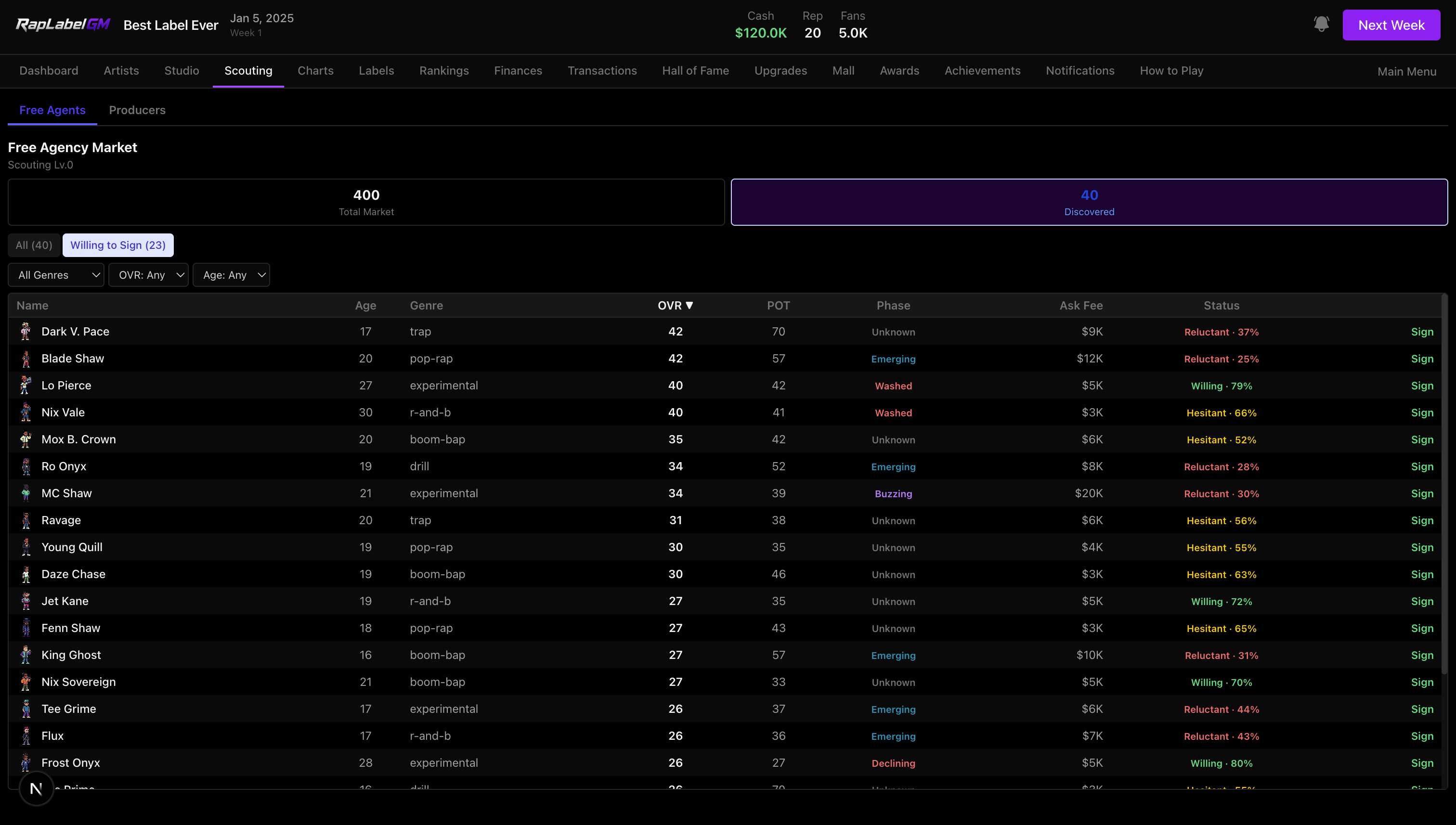
Artist Development & Roster Strategy
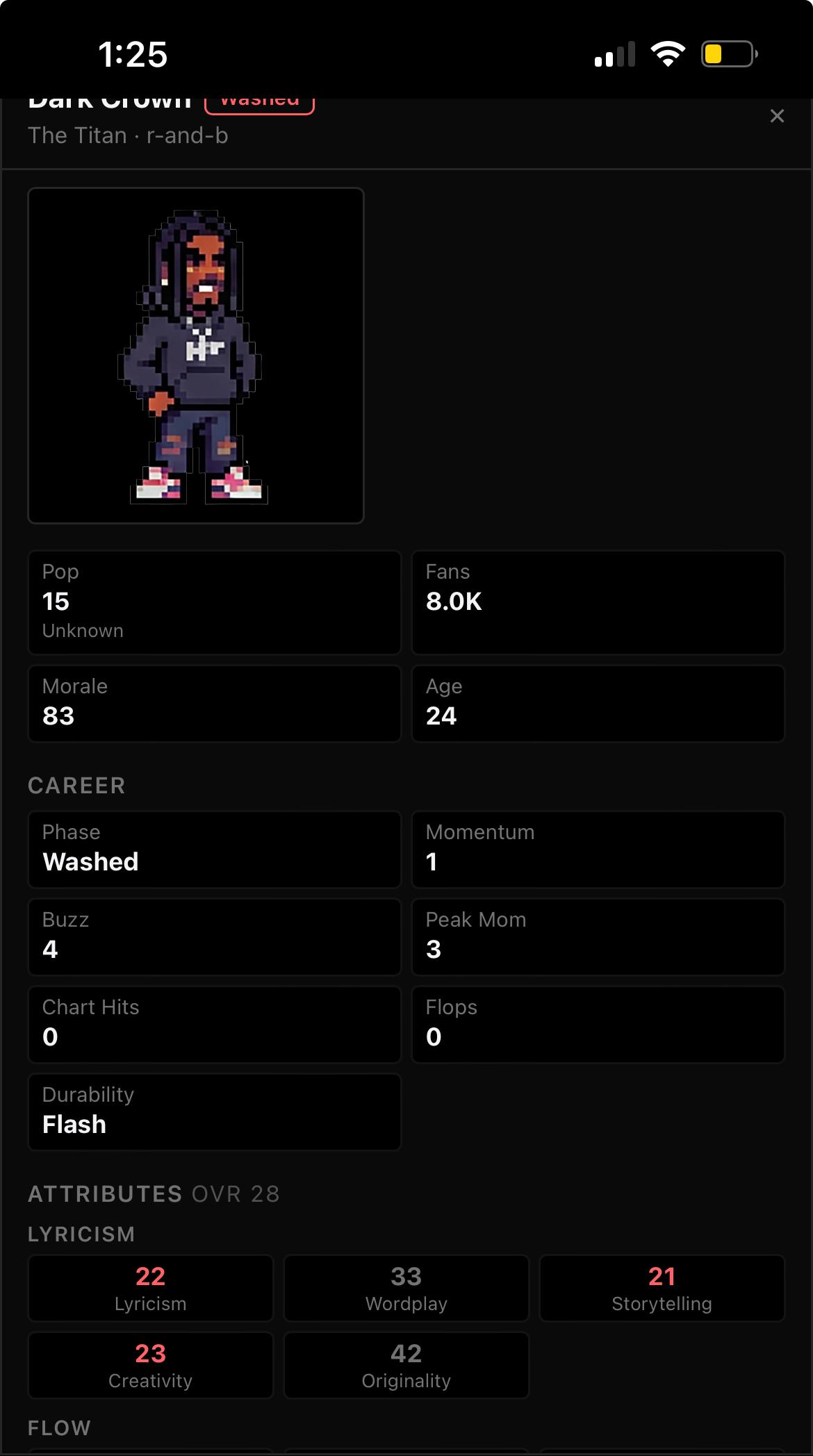
Players build a roster of artists with varying attributes including skill, consistency, work ethic, and market appeal. Signing decisions depend on label reputation, and long-term contracts require strategic investment. Artist growth is not guaranteed, forcing players to balance risk across their roster.
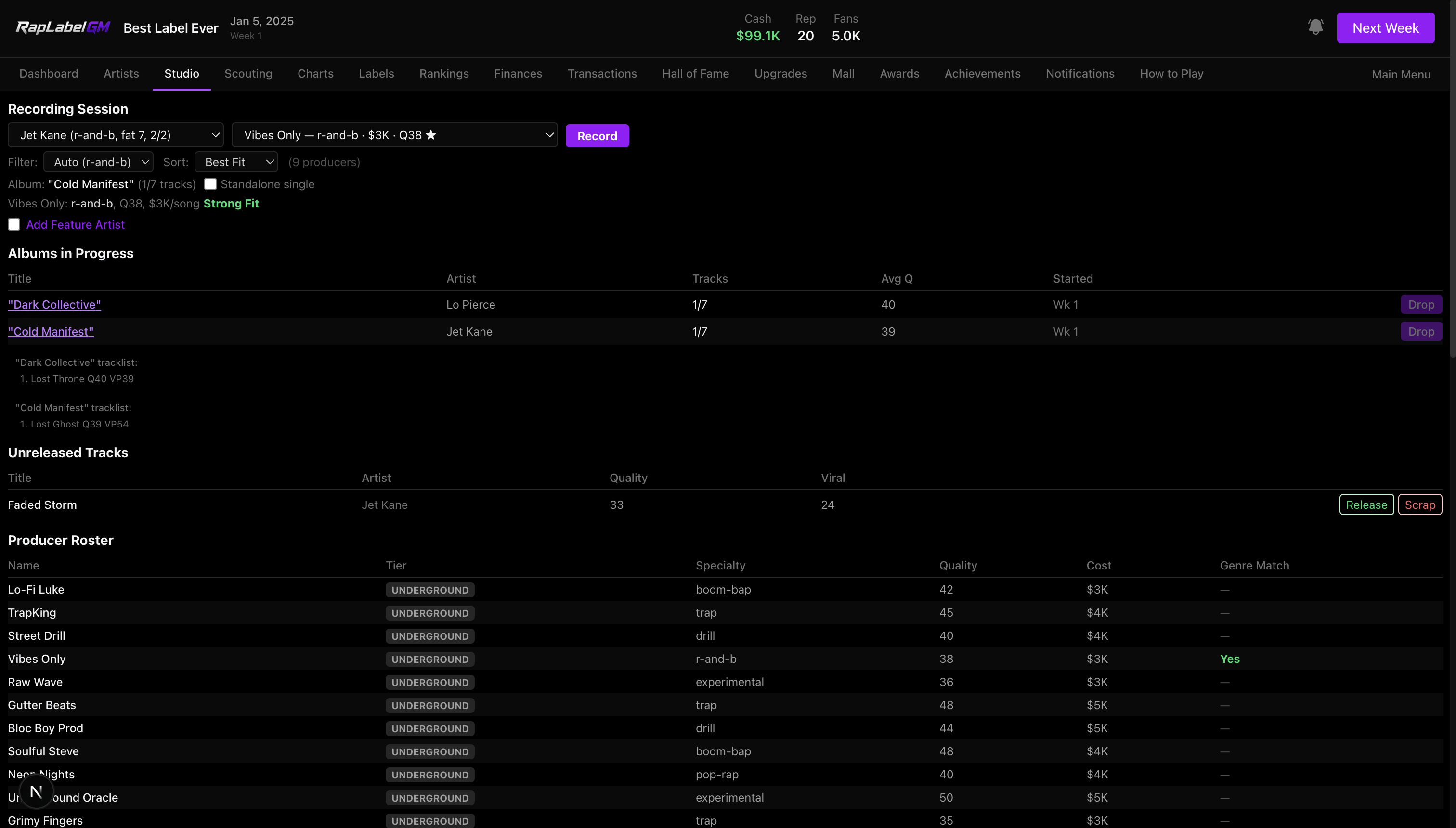
Music Production & Output Strategy
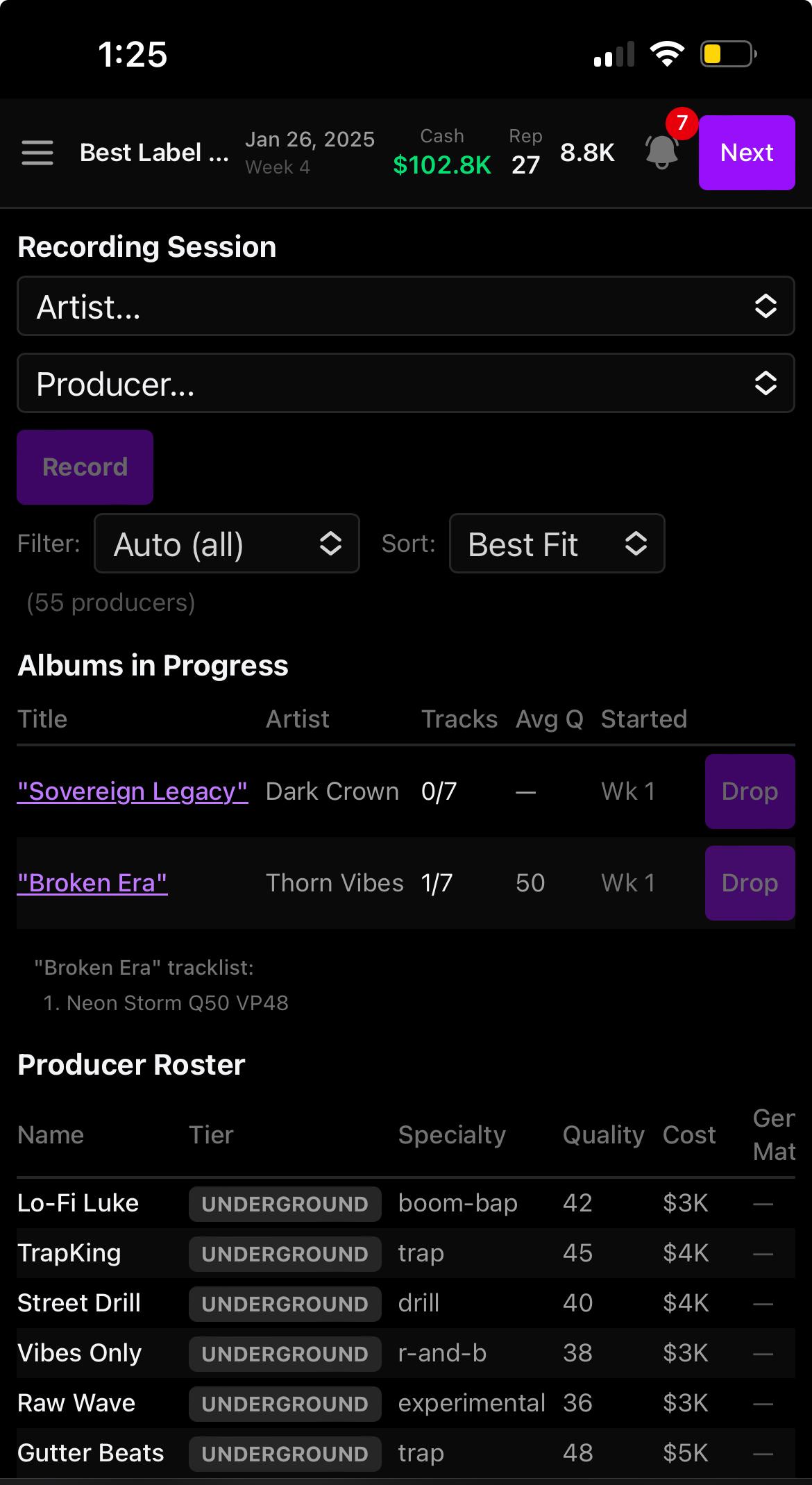
Music is created by pairing artists with producers, with outcomes influenced by both attributes and player decisions. Players can prioritize volume or quality, introducing a tradeoff between consistency and potential success. This system creates variability in results, making each release uncertain.
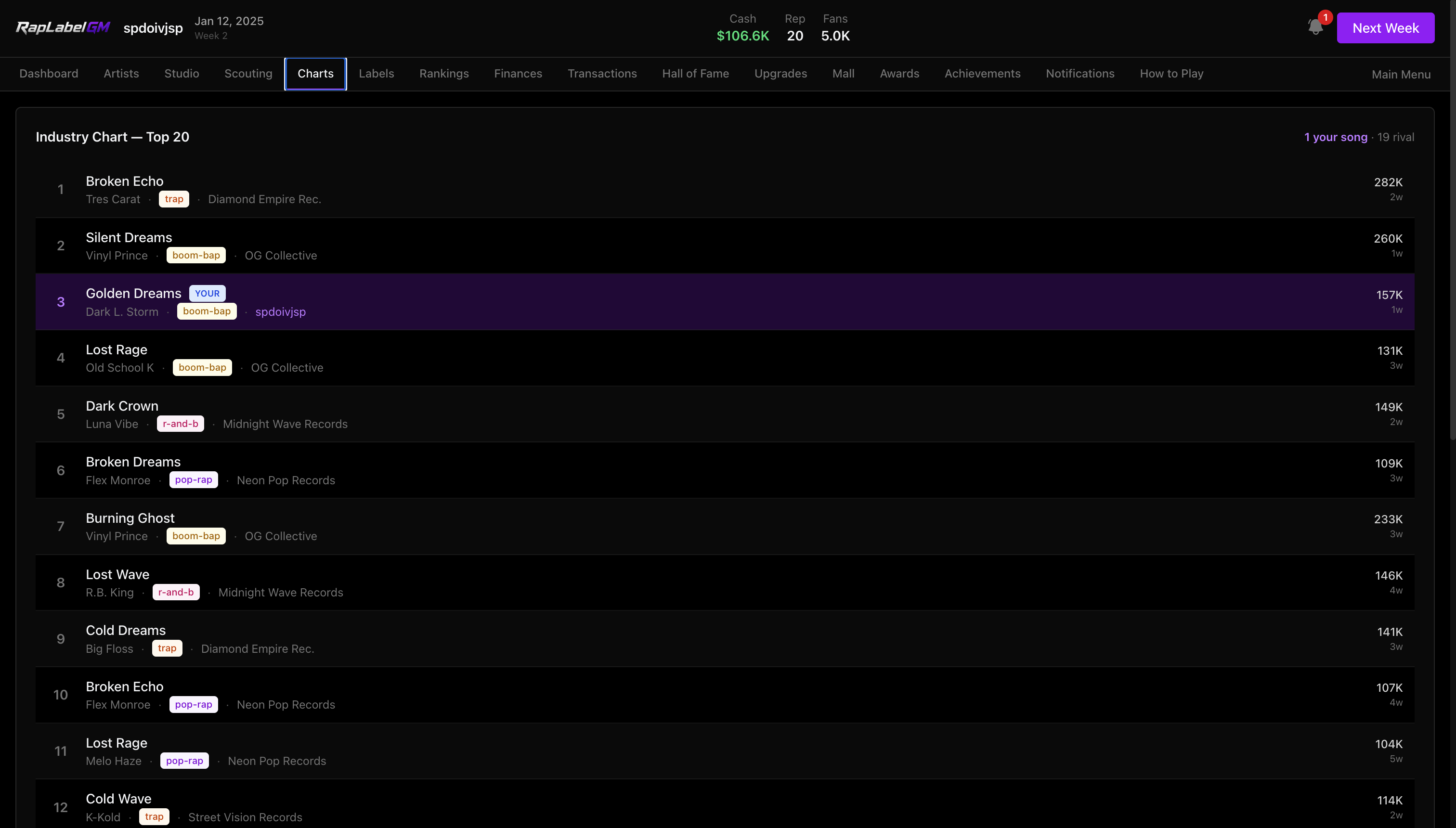
Release, Performance & Growth Loop
Releases are scheduled and evaluated based on performance across charts and audience reception. Successful releases generate revenue, reputation, and progression, feeding back into artist growth and label expansion. Timing and consistency play a critical role in long-term success.
Economy, Expansion & Competition
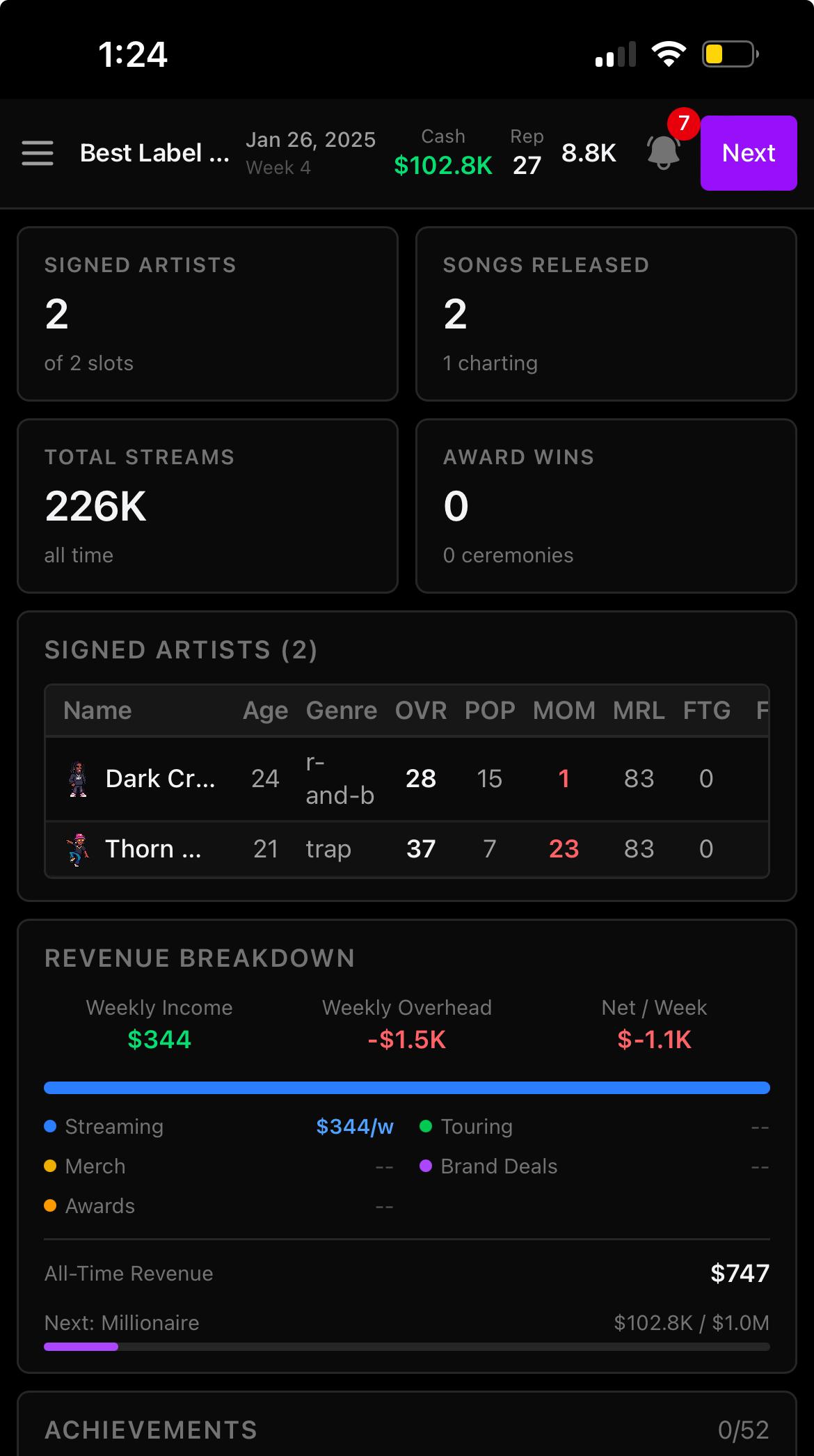
The label operates within a financial system that tracks revenue, expenses, and investments. Income can be generated through multiple channels, including music performance and touring. Competing labels introduce external pressure, requiring players to adapt strategy in response to market dynamics.
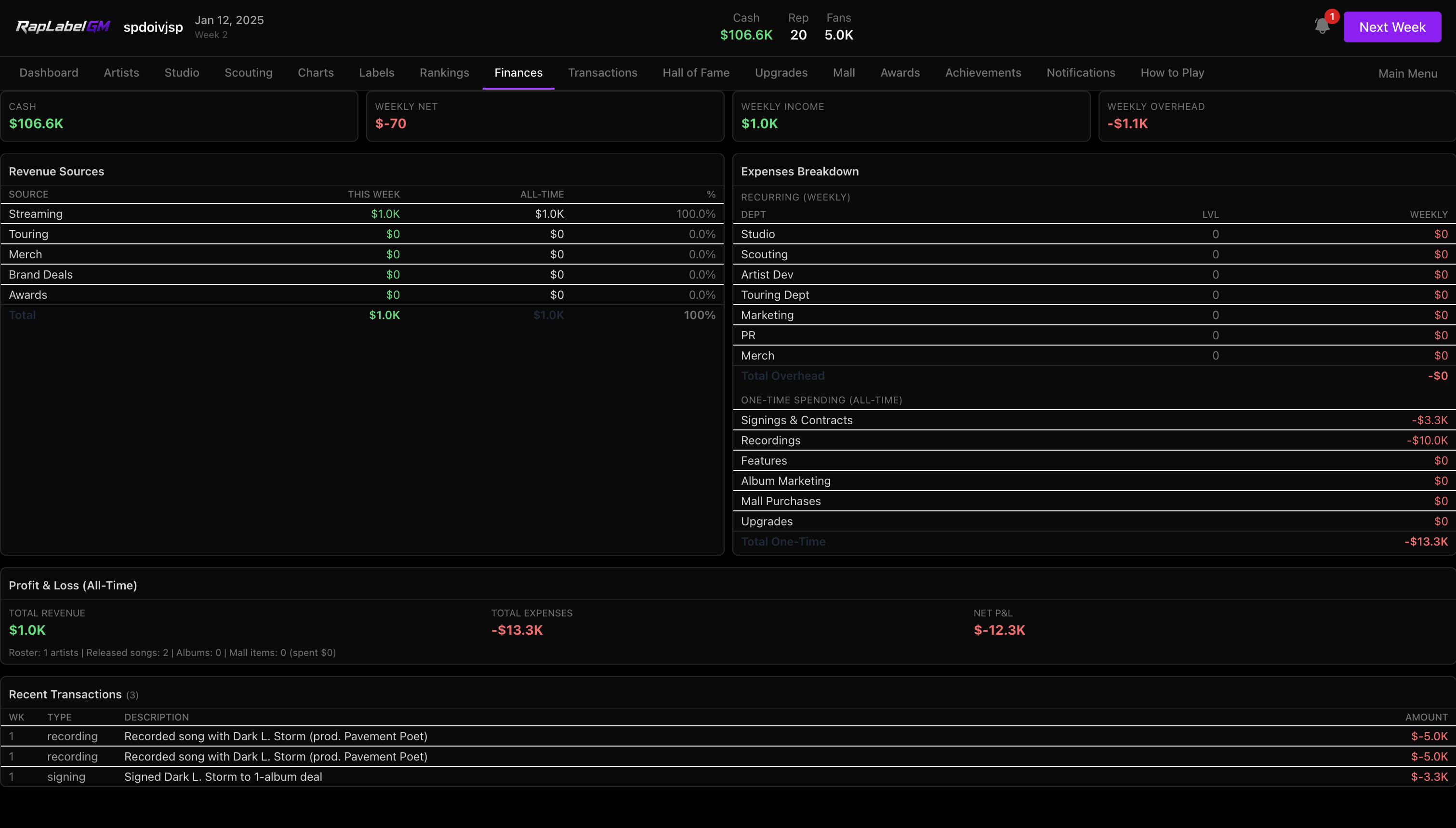
Visual & Interface Design
The experience is supported by custom character sprites and a structured interface system designed to present complex data clearly. Tables, dashboards, and simplified layouts allow players to manage multiple systems without being overwhelmed. The interface is optimized for both desktop and mobile, adapting layouts and controls to work across screen sizes.